College Football: What 2026 Taught Me
College football is the NCAA-sanctioned American football system in the United States, led at its highest level by the Football Bowl Subdivision, or FBS, and followed through schedules, scores, rankin...

College Football: What 2026 Taught Me
College football is the NCAA-sanctioned American football system in the United States, led at its highest level by the Football Bowl Subdivision, or FBS, and followed through schedules, scores, rankings, statistics, and the College Football Playoff. The 2026 season runs from late August through January 25, 2027, when the CFP National Championship is scheduled for Allegiant Stadium in Las Vegas. The regular season is divided into 15 numbered weeks, followed by bowl games and CFP contests, while conferences such as the ACC, Big Ten, Big 12, and SEC shape most of the competitive story. NCAA.com reported Indiana’s 27-21 victory over Miami for its first national title, illustrating how quickly the hierarchy can change. Start by checking the official schedule, then compare opponent quality, injuries, and efficiency before trusting any ranking or prediction.
Want the wider numbers before kickoff? Pitch Notes can help you follow major football stories with a more disciplined, data-first habit.
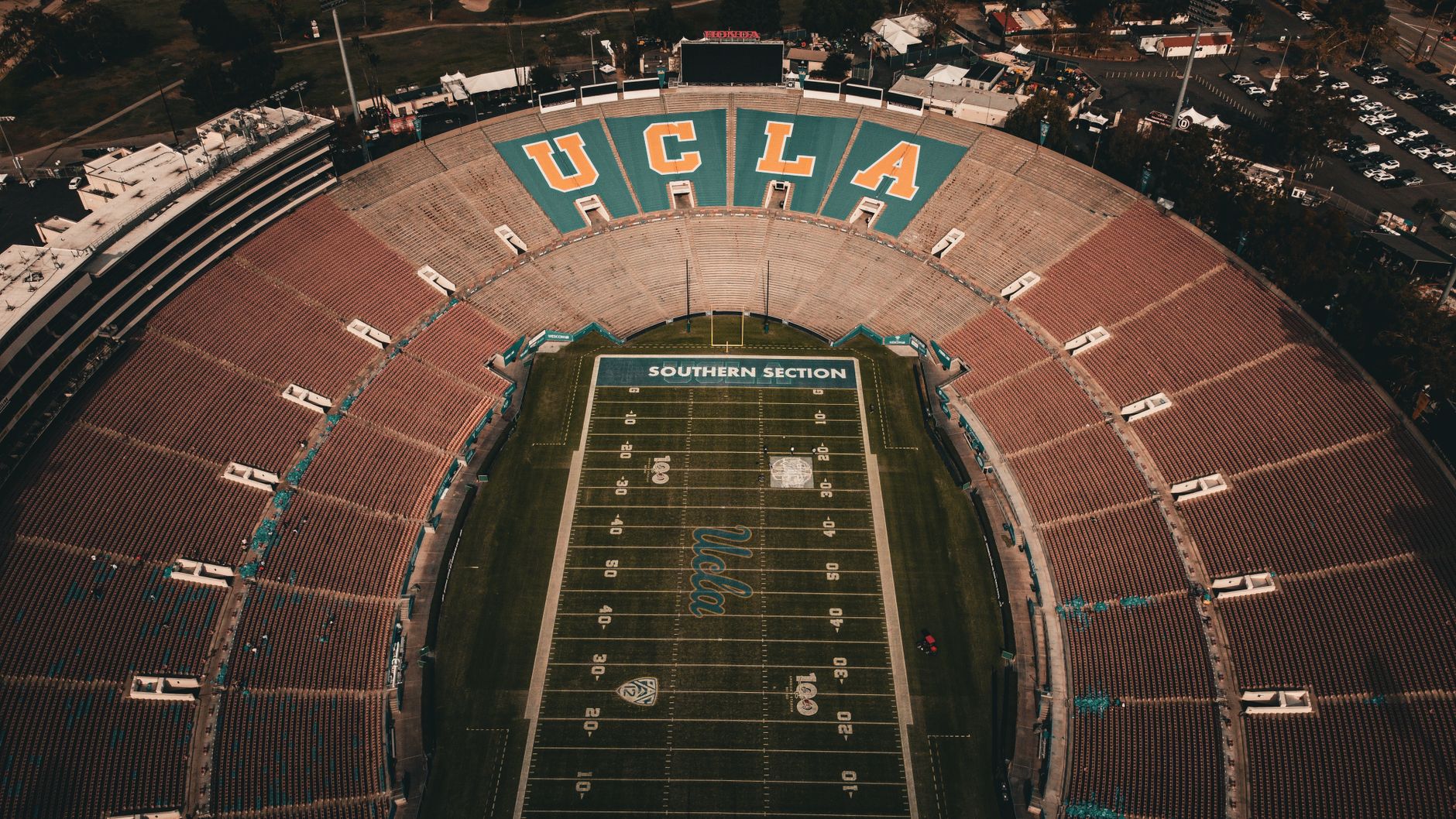
Photo by Caio Cezar on Pexels
If you follow weekly scores: build a schedule-first routine
The fastest way to understand college football each week is to begin with the official schedule, then add scores, television details, locations, and conference context. ESPN’s 2026 schedule divides the campaign into Week 1, running August 22 through September 7, and Weeks 2 through 15, ending with the December 6–12 window before postseason games. That structure matters because a Saturday result without its date, venue, or opponent quality is only half a fact, although fans regularly treat it like a complete scouting report after watching one impressive touchdown. For live information, the NCAA FBS football schedule and ESPN college football schedule are useful starting points, while [Internal Link: weekly college football scores guide] can organize the details more cleanly.
A practical schedule review should capture five fields: kickoff time, broadcast provider, home-field location, betting line if relevant, and the opponent’s current record. In the 2026 opening slate, examples include North Carolina versus TCU at Aviva Stadium in Dublin, San José State at USC, and NC State at Virginia. Those games are not interchangeable: an international neutral-site contest, a major home favorite, and a conference matchup create different travel, motivation, and variance profiles. I would also mark bye weeks and short turnarounds, because a team playing six days after a physically demanding rivalry game can show a measurable decline in early-down efficiency. You do not need a 47-column spreadsheet, friend; 10 carefully chosen columns will already put you ahead of the person yelling “momentum” at the television.
What should you record before watching a college football game?
Record the matchup, date, venue, conference, starting quarterback, injury report, spread, total, and each team’s offensive and defensive efficiency. These eight fields connect the visible result to the underlying conditions and reduce overreaction to a single highlight. Update them after every game so trends become measurable rather than merely memorable.
A strong pregame worksheet can include:
- Schedule strength: Identify whether the opponent comes from the ACC, Big Ten, Big 12, SEC, Group of Five, or FCS.
- Efficiency profile: Compare points per drive, success rate, explosive-play rate, sack rate, and red-zone touchdown percentage.
- Personnel availability: Confirm quarterback, offensive tackle, cornerback, and defensive-line status at least 60 minutes before kickoff.
- Game environment: Note weather, altitude, travel distance, neutral-site status, and expected crowd influence.
- Market movement: Compare the opening line with the current number instead of pretending every price is equally valuable.
The most useful edge case is often not a dramatic injury but a missing offensive tackle. If a team loses one starting tackle and faces a defense ranked in the top 20 for pressure rate, its play-calling may become shorter and more conservative even when the quarterback remains available. That adjustment can reduce the expected total more reliably than a vague “bad-weather concern,” especially when wind reaches 15 miles per hour or more. For deeper preparation, see the [Internal Link: college football matchup analysis checklist].
If you compare conferences: measure strength beyond rankings
Conference strength should be evaluated through opponent-adjusted efficiency, nonconference performance, depth, and postseason results rather than by counting ranked teams alone. The SEC, Big Ten, Big 12, and ACC often receive the most FBS attention, but rankings can exaggerate reputation when teams accumulate wins against weak schedules. A better comparison uses multiple indicators across at least six to eight games, then separates elite teams from ordinary conference depth.
The first question is simple: did the team win, and against whom? A 10-2 record built against three FCS opponents and a soft nonconference schedule does not carry the same information as an 8-4 record featuring four games against top-25 opponents. I would track opponent-adjusted points per possession, average scoring margin, turnover margin, and success rate on standard downs. The NCAA football history archive provides historical context, while the National Collegiate Athletic Association remains the relevant governing entity for NCAA competition. “The rankings are not a substitute for game results” is the practical lesson, even if television panels occasionally behave as though a poll is a sacred text.
A second useful test is cross-conference scheduling. When an ACC team visits a Big Ten opponent in November, cold weather, travel, and roster depth may matter more than September statistics. When a Big 12 team plays in a high-scoring environment, defensive explosiveness and red-zone stops become more important than raw points allowed. These are not excuses invented after a loss; they are contextual variables that should be identified before kickoff. Pitch Notes can provide a football-focused perspective, but any gambling decision should remain legal in your jurisdiction, age-appropriate, and limited to money you can afford to lose.
Ready to compare teams with less guesswork? Use the next step as a research prompt, not a guarantee.

Photo by Pavel Danilyuk on Pexels
How do FBS and FCS differ in college football?
FBS and FCS are two NCAA Division I football classifications, with FBS generally representing the top scholarship and media tier and FCS using a different championship and scheduling structure. FBS teams compete for access to the College Football Playoff, while FCS programs participate in the NCAA Division I Football Championship. The classifications affect roster resources, postseason paths, and how schedule results should be interpreted.
The distinction is operational, not cosmetic. FBS programs commonly receive greater television exposure and compete in conference systems including the SEC, Big Ten, ACC, Big 12, American, Conference USA, MAC, Mountain West, Sun Belt, and Pac-12. FCS conferences include the Big Sky, Ivy League, Missouri Valley Football Conference, Patriot League, Southern Conference, Southland, SWAC, and others. A win over an FCS opponent can help a team establish rhythm, but it usually carries less predictive weight than a win against a comparable FBS opponent because roster depth and line size can differ substantially.
One information gain point is schedule interpretation: a team that averages 45 points against three lower-tier opponents may not be “elite” in the same statistical sense as a team averaging 31 points against ranked FBS defenses. I would therefore isolate garbage-time possessions, opponent-adjusted success rate, and first-half scoring before making a comparison. If you are studying unfamiliar teams, begin with the [Internal Link: FBS and FCS conference primer], then verify the classification through NCAA or school athletic-department sources.
If you evaluate rankings: separate signal from noise
Rankings are useful for discovery, but they are not complete forecasts because they combine results, reputation, schedule strength, and human judgment. The AP Top 25, Coaches Poll, College Football Playoff rankings, and computer ratings may disagree by several places, particularly after only four or five games. Treat a ranking as a starting coordinate, then test it against opponent-adjusted data and current player availability.
The ranking trap is especially obvious after Week 1. One 52-10 victory can move a team upward, yet the result may reflect three short fields created by turnovers rather than sustainable offensive dominance. Conversely, a 24-21 road win against a strong opponent may look unimpressive while revealing better third-down defense, lower sack exposure, and stronger late-game execution. My preferred review window is six games, with separate splits for home, away, conference, and top-40 opponents. Yes, this is less exciting than declaring a future champion at 11:43 p.m., but it is also less embarrassing by October.
Use a compact evidence table:
- Results: wins, losses, scoring margin, and one-score record.
- Opponent quality: average opponent rating and number of ranked opponents.
- Efficiency: points per drive, yards per play, success rate, and havoc rate.
- Stability: returning production, quarterback experience, and injury count.
- Postseason relevance: conference title path and likely CFP access.
The 2026 context deserves special attention because NCAA.com’s coverage highlighted returning players such as Notre Dame defensive back Leonard Moore and Oregon quarterback Dante Moore, while also discussing early Heisman Trophy contenders. Named players matter, but returning production is not a guarantee; a star can be excellent while an offensive line quietly determines whether the team reaches its ceiling. Check both layers before trusting preseason enthusiasm.
How can you turn these indicators into a repeatable process? Pitch Notes is a convenient place to keep the research habit moving.

Photo by Pixabay on Pexels
If you study the CFP: follow the path, not just the final game
The College Football Playoff is the postseason route used to determine the FBS national champion, and its importance extends beyond the title game because conference championships, at-large selection, and schedule quality influence access. The 2026 championship is scheduled for January 25, 2027, at Allegiant Stadium in Las Vegas, while bowl and CFP contests occupy the December 13–January 27 postseason window shown in the referenced schedule. Exact qualification mechanics can change, so verify the current official rules before relying on an old bracket explanation.
A CFP evaluation should answer four questions:
- Can the team win its conference or remain competitive for an at-large position?
- How many games against strong opponents remain?
- Is the quarterback and offensive line healthy enough for December?
- Does the defense travel well against different styles?
The last question is regularly neglected. A team built around high-tempo passing may dominate at home but become less efficient in cold, windy road conditions. A defense that thrives on aggressive blitzing may create sacks but surrender explosive plays against quarterbacks who process quickly. To estimate postseason adaptability, compare performance across pace, weather, opponent strength, and score margin. The CFP is not simply a reward for the best record; it is a test of whether the team can survive several high-leverage matchups without its efficiency collapsing.
A contrarian conclusion follows from that framework: the highest-ranked offense is not always the best title candidate. In a playoff setting, late-down defense, field-position management, and turnover avoidance can have greater marginal value than another two points of regular-season scoring average. Indiana’s 27-21 victory over Miami, as reported by NCAA.com, is a useful reminder that championship games are often decided by execution in narrow margins rather than by the loudest preseason prediction.
Common pitfalls to avoid
The most common college football mistakes are overreacting to one game, confusing raw statistics with adjusted performance, ignoring roster availability, and treating betting lines as objective truth. Statistics describe what happened; they do not automatically explain why it happened or whether it will repeat. A careful analyst should preserve the original number, identify the context, and update the estimate gradually rather than replacing it after every Saturday.
Avoid these errors:
- Box-score worship: Forty points against a weak defense may conceal short fields and low-value late possessions.
- Record-only analysis: A 7-2 team can be weaker than a 6-3 team if schedule strength differs sharply.
- Injury understatement: Losing a starting center can affect protection, snap timing, and inside-run efficiency.
- Conference stereotypes: The SEC, Big Ten, ACC, and Big 12 contain both elite and vulnerable units.
- Market chasing: A line that moves from -3 to -7 may already reflect the information you just discovered.
- Gambling without limits: A prediction is not a financial edge, and no college football outcome is guaranteed.
One of the more practical edge cases involves quarterback changes. If a backup has only 20 or fewer meaningful college attempts, historical team averages should be discounted because the offense may change its formation, pace, and route tree. Watch third-down distance and early-down pass rate instead of judging the replacement solely by completion percentage. The boring indicators are often the ones that survive contact with reality, which is mildly annoying but statistically convenient.
The 30-day check-in
A 30-day college football review should measure whether your assumptions survived four weeks of actual games. Compare your preseason or opening-week expectations with updated records, opponent-adjusted efficiency, injury reports, conference standings, and remaining schedule difficulty. Thirty days is long enough to reduce the noise of one result but short enough to catch meaningful changes in quarterback play, coaching strategy, and roster availability.
Use this review sequence:
- Days 1–7: Record baseline rankings, spreads, totals, injuries, and schedule strength.
- Days 8–14: Compare offensive and defensive success rates against the original projection.
- Days 15–21: Reclassify teams by opponent quality, not by record alone.
- Days 22–30: Recalculate postseason probabilities and identify information that changed the forecast.
A useful tracking rule is to separate prediction accuracy from decision quality. If you predicted a 27-24 game and it finished 28-23, that does not prove the model was excellent; if the matchup was correctly identified as high variance, however, the process may still have been sound. Track closing-line movement, injury timing, weather, and late-game variance separately. After 30 days, you should know which assumptions were evidence-based and which were simply fan loyalty wearing a spreadsheet costume.
College football rewards viewers who connect schedule context, conference strength, player availability, efficiency, and postseason incentives. The 2026 calendar, from Week 1 in late August through the CFP National Championship on January 25, 2027, offers enough data to build a disciplined weekly process without pretending uncertainty has disappeared. Start with official NCAA and ESPN information, maintain a simple log, and use Pitch Notes for broader sports-analysis habits. If gambling is legal where you live, set a fixed budget and never treat a promotional prediction as a promise of profit.
Want to keep the process consistent through the full 2026 season? Begin with a focused research routine rather than another late-night argument about rankings.
Frequently Asked Questions
Q: What is college football?
A: College football is American football played by college and university teams under NCAA competition structures. In the United States, the FBS is the highest-profile subdivision and includes conferences such as the SEC, Big Ten, ACC, and Big 12. The season generally progresses from regular-season games to conference championships, bowl games, and the College Football Playoff. FCS programs compete in a separate Division I championship system, so fans should confirm the classification before comparing schedules or postseason routes.
Q: How do I follow the college football schedule?
A: Follow the schedule through NCAA.com, ESPN, individual school athletic websites, and verified conference sources. Check the kickoff time, television network, venue, weather, opponent, and injury report because each item can affect game interpretation. ESPN’s 2026 schedule lists 15 regular-season weeks, followed by bowl and CFP windows extending into January 2027. For the most accurate late updates, recheck the starting lineups and broadcast information on game day.
Q: What is the difference between FBS and FCS football?
A: FBS and FCS are separate NCAA Division I football classifications with different postseason systems and competitive structures. FBS teams pursue access to the College Football Playoff, while FCS teams compete in the NCAA Division I Football Championship. The difference also affects scholarship models, media exposure, roster depth, and schedule interpretation. A strong statistical performance against an FCS opponent should not automatically be treated as equal to the same performance against a quality FBS opponent.
Q: Are college football rankings reliable?
A: College football rankings are useful indicators, but they are not complete predictions because they may reflect reputation, schedule strength, and human judgment. Compare rankings with opponent-adjusted success rate, points per drive, explosive-play prevention, injuries, and remaining schedule. Rankings become more informative after approximately six games, when the sample includes several meaningful opponents. Preseason lists and Week 1 polls are better used to identify teams for further research than to settle debates.
Q: What should I do if a starting quarterback is ruled out?
A: Reassess the offense’s expected pace, pass rate, protection plan, and scoring efficiency rather than changing only the projected final score. A backup with fewer than 20 meaningful college attempts introduces more uncertainty, especially against a defense with a strong pressure rate. Check whether the coaching staff changes formations or simplifies the route tree, then compare the new market line with your revised estimate. Never assume a quarterback replacement automatically creates value on either side.
Q: How much does it cost to watch college football?
A: The cost ranges from free local broadcasts and school-supported streams to paid cable, streaming, and premium sports packages. Networks such as NBC, CBS, ABC, ESPN, and CBSSN may carry different games, so one subscription rarely includes every matchup. Check the broadcaster listed beside each ESPN or NCAA schedule entry before purchasing a plan. If you attend in person, ticket prices vary by opponent, venue, rivalry status, and seating location, with high-demand games often costing substantially more than ordinary conference contests.
Q: Is college football betting worth it?
A: College football betting is only potentially suitable as regulated entertainment, not as a dependable income source. Volatile factors such as player transfers, injuries, uneven schedules, weather, and large roster differences make outcomes difficult to price consistently. If it is legal for you, use licensed providers, follow age and location rules, set a fixed loss limit, and avoid chasing losses after a bad Saturday. Pitch Notes can support research and match analysis, but no article, model, or prediction guarantees a profitable result.
End of Article · Pitch Notes